Top 5 Stress Relief Techniques That Actually Work Backed by Science

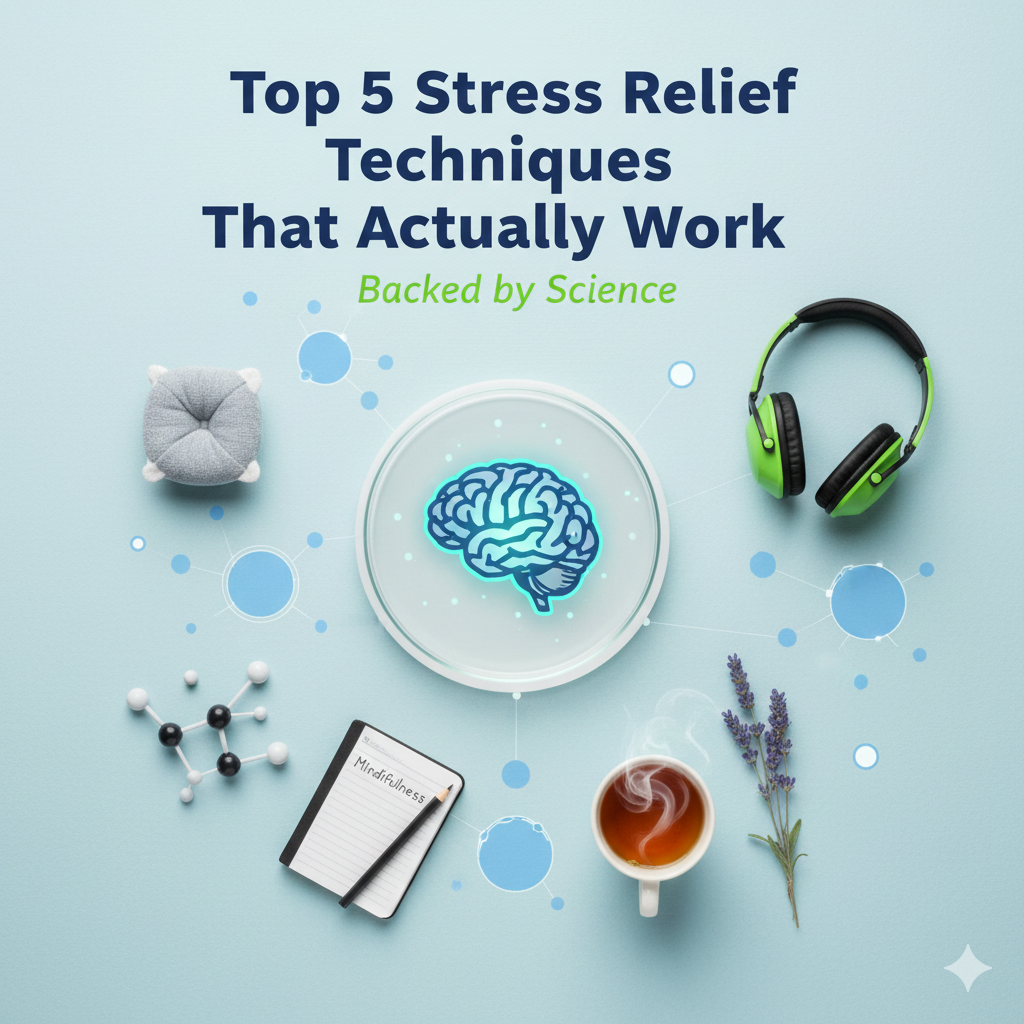
It’s no surprise that Top 5 Stress Relief Techniques That Actually Work has become one of the most searched phrases today. The reason? Nowadays, almost everyone is going through the same scenario. Your phone buzzes, emails pile up, deadlines loom and before you know it your shoulders are tight and your mind will not slow down. Sound familiar? That is to stress your body’s natural response to pressure, challenge or demand. While short bursts of stress can keep you alert, constant tension takes a toll on both body and mind.
It leads to fatigue, poor sleep, anxiety, and even heart health issues. In today’s fast-paced world, it is easy to feel stuck in a loop of worry and exhaustion. The good news? Relief is possible. In this blog, we will explore five science-backed stress relief techniques. These tips are practical, proven ways to help you feel calmer, clearer and more in control.
Best Stress Relief Techniques for Everyday Inner Calm
In today’s fast-paced world, stress can quietly drain both your energy and focus. However, the good news is that you can train your mind and body to relax naturally. These stress relief techniques combine science-backed methods and mindful practices that help lower tension, balance emotions, and improve overall well-being. Whether you’re at work, home, or simply need a quick reset, these techniques guide you toward calm, focus, and control one breath at a time
Technique: 1 Master Calm with Deep Breathing
When stress hits our breathing changes it becomes shallow, fast, and tight. This signals your body’s fight-or-flight response, releasing adrenaline and cortisol. Deep, controlled breathing does the opposite.
It activates the parasympathetic nervous system, your body’s built-in rest and relax mode lowering heart rate, reducing cortisol levels, and helping your mind regain balance. In other words, it is one of the simplest and most effective deep breathing techniques for stress relief.
How to Practice Simple Deep Breathing
Try this quick, science-backed method it takes less than five minutes and can be done anywhere:
- Sit or lie down in a comfortable position.
- Inhale slowly through your nose for a count of four. Feel your abdomen expand.
- Hold your breath gently for two counts.
- Exhale slowly through your mouth for a count of six, letting go of tension.
- Repeat this cycle for three to five minutes.
This 4-6 breathing or box breathing technique can instantly calm your nervous system.
When to Use the Best Ways To Reduce Stress
- Before a meeting: clear your head and steady your nerves.
- Before sleep: relax your body and slow racing thoughts.
- During conflict: regain composure before responding.
Technique: 2 Relax Your Body with Progressive Muscle Release
Ever notice how stress makes your body feel tight, shoulders hunched, jaw clenched, back stiff? That is because when you’re under pressure, your muscles automatically contract as part of the body’s fight-or-flight response. Over time, this tension can become your default state, leading to headaches, fatigue, and restless sleep. Progressive Muscle Relaxation (PMR) is one of the top 5 stress relief techniques that actually work to break that cycle. It trains your body to recognize tension and consciously let it go.
How to Practice PMR (Head-to-Toe Method)
- Find a quiet spot and sit or lie comfortably.
- Start with your feet, curl your toes and tense the muscles for 5–10 seconds.
- Slowly release and feel the difference between tightness and relaxation.
- Move upward through each muscle group: calves → thighs → hips → abdomen → chest → shoulders → arms → hands → neck → face.
- At each step, breathe deeply as you tense and release, noticing the sensations.
This mindful scanning of the body helps you release tension you didn’t even realize you were holding.
Short Version for Busy Moments
If you don’t have time for a full session, try focusing on your neck and shoulders, the areas most affected by daily stress. Gently tense for a few seconds, then relax completely while breathing deeply.
Practicing PMR regularly improves sleep quality, boosts body awareness, and creates a lasting sense of calm. It is a simple yet powerful way to restore balance through muscle relaxation for stress
Technique: 3 Strengthen Focus with Mindfulness Meditation
Have you ever caught your mind replaying yesterday’s worries or jumping ahead to tomorrow’s to-do list? That is the opposite of mindfulness. Mindfulness simply means paying full attention to the present moment . And noticing your thoughts, feelings, and sensations without judgment. It is about observing but not reacting.
Science shows that mindfulness changes the way the brain handles stress. Regular practice reduces activity in the amygdala (the brain’s alarm centre) and strengthens the prefrontal cortex, which governs focus and emotional regulation.
Studies cited by Harvard Health and the NHS show that mindfulness can reduce anxiety, improve sleep, and even lower blood pressure.Making it one of the most effective tools for mindfulness for stress relief.
How to Practice Mindfulness: 5–10 Minute Relaxation Tips for Mind
- Find a quiet place and sit comfortably.
- Close your eyes or soften your gaze.
- Take a few deep breaths, then let your breath settle naturally.
- Focus on the sensation of breathing the rise and fall of your chest or abdomen.
- When your mind wanders (and it will), gently bring your attention back to the breath.
- Continue for 5–10 minutes, allowing thoughts to pass like clouds in the sky.
You can also integrate mindfulness into daily moments:
- Mindful walking: feel each step, the air on your skin, the rhythm of movement.
- Mindful eating: slow down, savour flavours and truly experience your meal.
- Mindful listening: focus fully when someone speaks without planning your reply.
Natural Stress Management: Practising mindfulness for stress relief does not require special tools. It’s just consistency and kindness toward yourself. Over time, it helps you respond to life’s challenges with calm, clarity and compassion.
Technique: 4 Move to Heal
When you are stressed, your body floods with hormones like cortisol and adrenaline preparing you to fight or flee. The problem is, most modern stress does not come from danger you can physically run from. That is why exercise is one of the most powerful ways to reduce stress naturally. Physical movement helps lower those stress hormones while releasing endorphins, the body’s feel-good chemicals that lift mood and promote relaxation.
How to Move for Stress Relief
You don’t need an intense workout or a fancy gym. Aim for 20–30 minutes of movement most days, focusing on consistency rather than intensity.
- Walking: Take a brisk walk outdoors for even 10 minutes to clear your head.
- Stretching or yoga: Gentle stretches release muscle tension and quiet the mind.
- Dancing: Put on your favourite playlist and let go of movement plus music is a double mood booster.
- Cycling or swimming: Great for steady cardio and rhythmic breathing.
Mini-Movement Hacks for Busy Days
- Stand up and stretch every 45 minutes.
- Take phone calls while walking.
- Do shoulder rolls or gentle twists at your desk.
- End your workday with a quick stroll to transition out of “work mode.”
Regular exercise for stress management not only reduces anxiety and tension but also boosts energy, improves sleep and sharpens focus. Think of movement as natural medicine for both body and mind free, accessible and instantly effective.
Technique: 5 Take Control Through Cognitive Reframing
Sometimes, it is not the situation that creates stress, but the story we tell ourselves about it. Cognitive Reframing is a technique rooted in Cognitive Behavioural Therapy (CBT). It helps you change the way you think so you can change how you feel. By identifying and challenging negative thought patterns, you regain control over your emotional response. It is one of the most effective mental techniques for stress,mainly when worries start to spiral.
The “Worry Time” Method
- Set aside 10–15 minutes daily as your dedicated worry time.
- During that window, write down your worries big or small.
- For each one, ask:
- Is this something I can control or act on?
- If yes → make a small, specific action plan (e.g., “Email HR about workload”).
- If no → consciously let it go and remind yourself, “This isn’t mine to solve right now.”
- Outside your worry time, when intrusive thoughts appear, note them and save them for later.
This structured approach, often called the “Worry Tree”, helps your brain stop looping on the same problems. It is considered the most effective out of the top 5 stress relief techniques that actually work
Example in Action
Instead of thinking, I will never meet this deadline, reframe it to, I can break this project into smaller steps and ask for help if needed. The situation does not change but your mindset and stress level do.
Over time, cognitive reframing reduces rumination, anxiety, and mental overload, training your brain to respond to stress with logic, not panic. It is practical psychology in motion, a simple, powerful tool for anyone learning how to manage worry and take back control.
How to Make These Techniques Stick
The key to managing stress isn’t doing everything perfectly, it is doing something consistently. Start small and build habits that naturally fit into your day. One of the easiest ways to do this is through habit stacking simply attach a new stress-relief habit to something you already do.
Here’s a simple example routine you can try:
- Morning: Take 5 deep breaths right after brushing your teeth.
- Midday: Go for a short walk or stretch between tasks.
- Evening: Practice Progressive Muscle Relaxation before bed.
You can track your progress in a journal or app to see what helps most. Remember, small steps done regularly are what create lasting calm. That is how you truly build healthy habits that last.
When to Seek Professional Help
While self-help techniques can make a big difference, sometimes stress becomes too heavy to manage alone. If you are experiencing chronic stress, ongoing insomnia, frequent panic or anxiety, burnout, or persistent sadness, it may be time to seek professional support.
Talking to a therapist, counsellor, or doctor can help you identify root causes and learn personalised coping strategies. Remember, reaching out for help is a sign of strength, not weakness. Just like you’d see a doctor for physical pain.
In the same way it is completely normal and healthy to get help for emotional stress. Knowing when to get help for stress can be the first step toward true recovery and balance.
Conclusion
Stress is an inevitable part of life, but it does not have to control you. The five techniques we explored are simple, proven ways to calm your mind and recharge your body. Each method helps you handle challenges with more clarity and less tension.
Remember, you can’t eliminate stress, but you can learn to master your response to it. Start small pick one technique today and notice how your body and mood begin to shift.
Your journey to balance starts with a single mindful breath. If you found this helpful, share your favourite technique in the comments, subscribe for more wellness tips.
FAQs
1. What does science back the most effective stress relief techniques?
The most effective techniques include deep breathing, progressive muscle relaxation, mindfulness meditation, physical movement, and cognitive reframing.All proven to lower cortisol and calm the nervous system.
2. How does deep breathing help reduce stress?
Deep breathing activates the parasympathetic nervous system, slowing heart rate, reducing cortisol, and signalling your body to relax naturally.
3. What is progressive muscle relaxation (PMR) and how does it work?
PMR involves tensing and releasing muscle groups to release built-up tension, improve body awareness, and promote deep relaxation.
4. Can mindfulness really help with stress and anxiety?
Yes. Studies show mindfulness meditation reduces activity in the brain’s stress centre, improves focus, and helps you respond calmly to challenges.
5. What is cognitive reframing and how can it reduce stress?
Cognitive reframing helps you challenge negative thoughts and replace them with balanced perspectives, reducing worry and improving emotional control.